Our story
A journey of restoration and hope.
The Ecolution Project
See it in motion
Watch Our Story
Why we exist
Who We Are
The Ecolution Project is a programme of the Seven Generations Initiative, a registered Non-Profit Company and Public Benefit Organisation (see our Governance section for more details). Based at Well-Being Sanctuary near Sedgefield on the Garden Route, we run three interconnected programmes — ecological restoration, wildlife corridors and regenerative living — restoring the Ruigtevlei wildlife corridor and building a community of active stewards of the land.
How it began
A Journey of Restoration and Hope
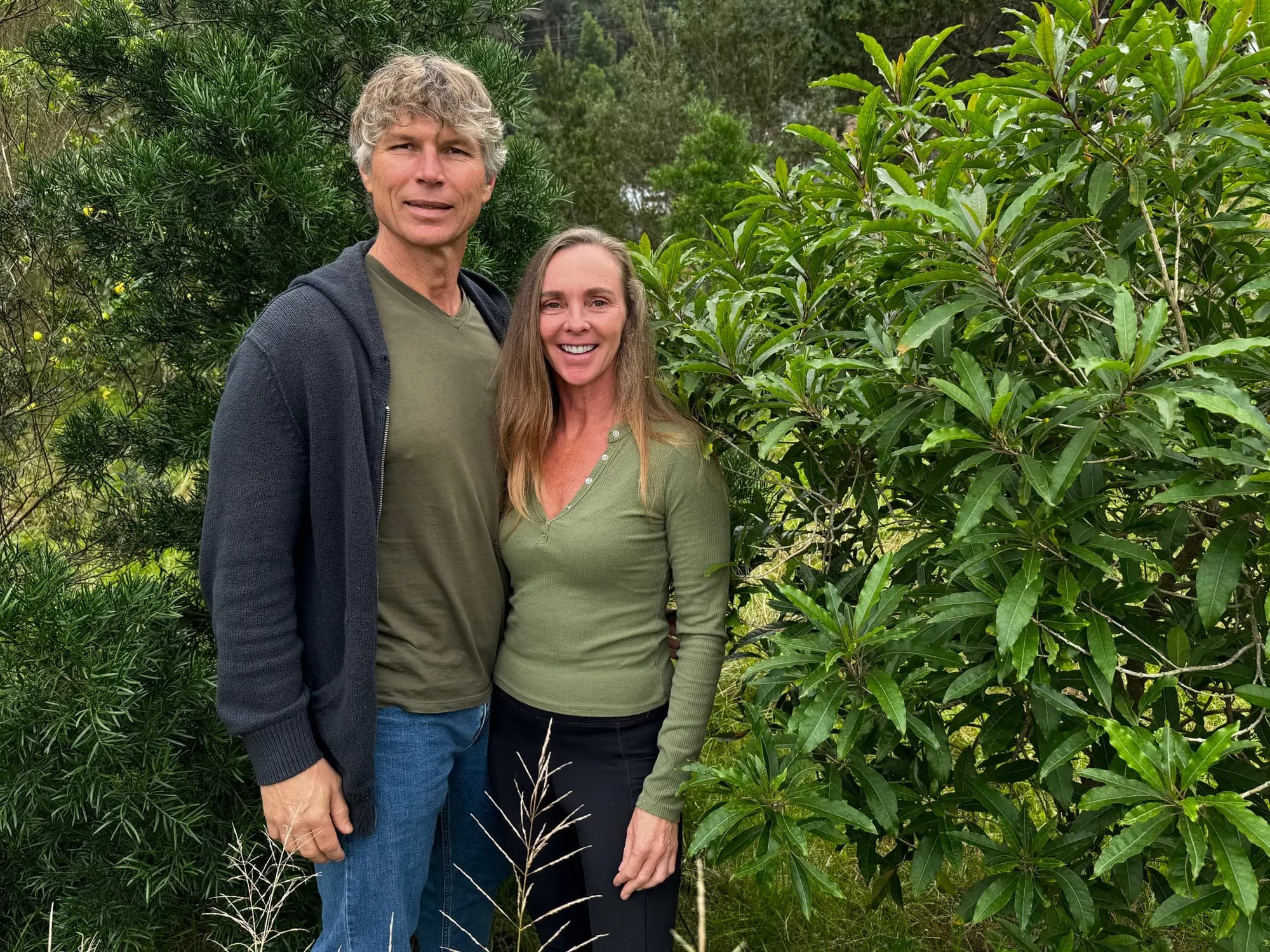
It all began as a dream – just the two of us, Mariette and Vincent, imagining a piece of land in South Africa where we could live in deep connection with nature. We didn’t know how, but we knew why: to give something back to the earth, to wildlife, and to future generations. We wanted to restore what had been damaged and create a place where both people and nature could flourish.
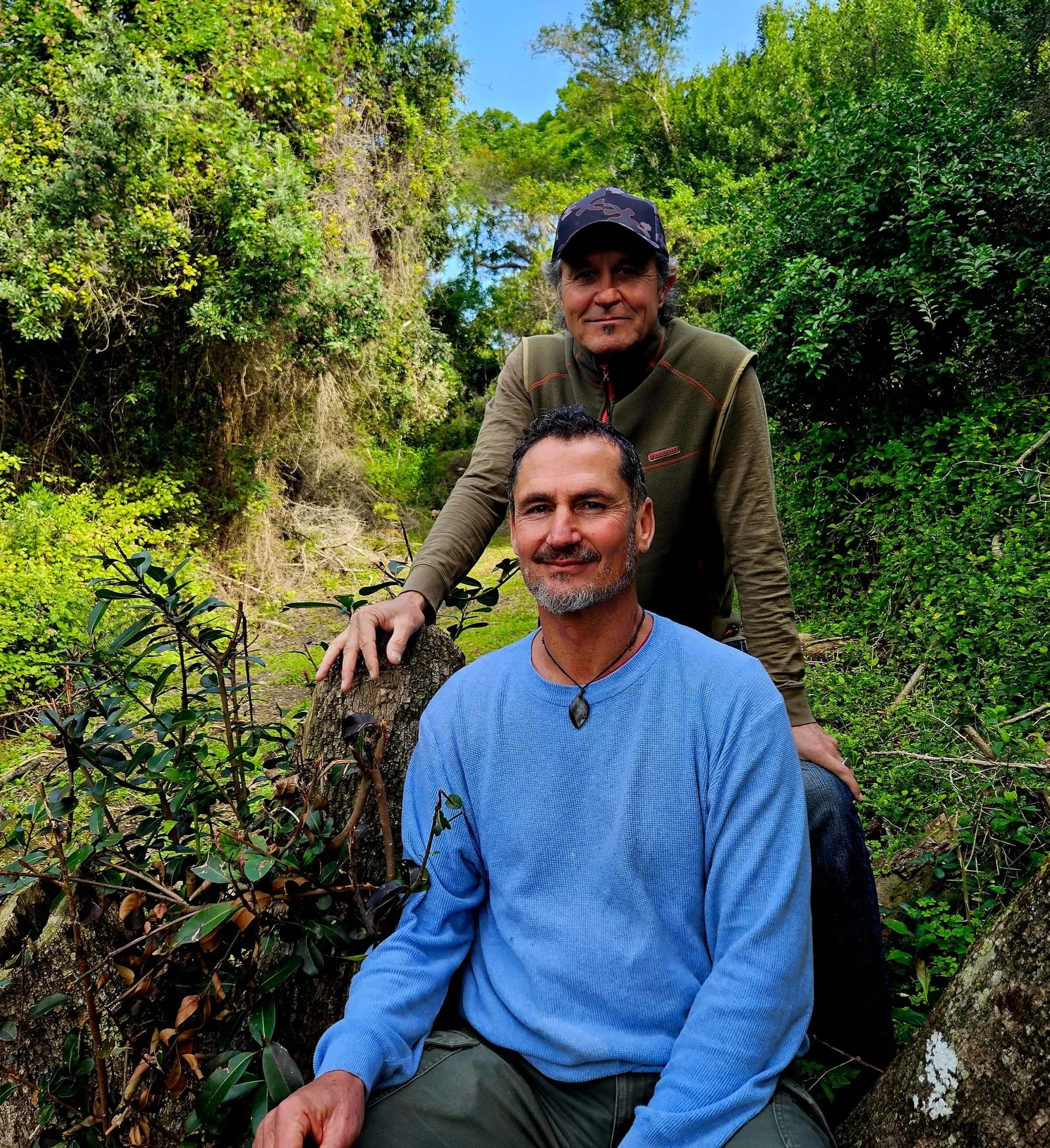
The land we found was once a cattle ranch, stripped of its indigenous vegetation and overrun by invasive alien species. For the past ten years, we’ve worked to bring it back to life — gradually removing what doesn’t belong, planting what does, and witnessing the return of birds, wild bees, Cape honeybees and indigenous plants. It hasn’t always been easy, but it has been deeply meaningful.
Today, the Well-Being Sanctuary lies at the heart of an emerging wildlife corridor and a future conservation servitude. We’ve protected more than 2 km of lakefront where wild creatures now roam freely, created a haven for wild bees and Cape honeybees, begun restoring indigenous forest, and launched projects that work in harmony with the land.
We also host retreats and festivals with a light and intentional human footprint. These gatherings build community, celebrate the natural world, and inspire deeper connection and more conscious ways of living. They are an invitation to come home – not only to nature, but also to ourselves.
Now we’re inviting others to walk this path with us – to protect, restore and dream even bigger. Because this land is more than a sanctuary for wildlife. It is a sanctuary for hope.
From ceremony to project
Be The Change You Want To See In The World
This phrase is often attributed to Gandhi, and it beautifully captures the spirit that has shaped our journey. Ever since we hosted our first Summer Solstice gathering in 2016, people from all walks of life have rolled up their sleeves and helped us plant indigenous trees, turning good intentions into meaningful action.
Our ceremonial tree planting on the Summer Solstice (21 December) gave birth to a large circular ‘stepping stone’ of indigenous forest for aerial wildlife. It also sparked a vision to restore much larger areas of land where invasive alien vegetation, particularly black wattle, had taken hold. Today, nearly 10 years later, people pitch their tents beneath the shade of those same thriving indigenous trees.
Although it would take several more years to formalise, this was the true beginning of the Ecolution Project. Throughout that journey, Ray Nolan of Precious Tree Project has been a steadfast friend, mentor and inspiration – always generous with his knowledge and among the first to roll up his sleeves and get his hands into the soil.
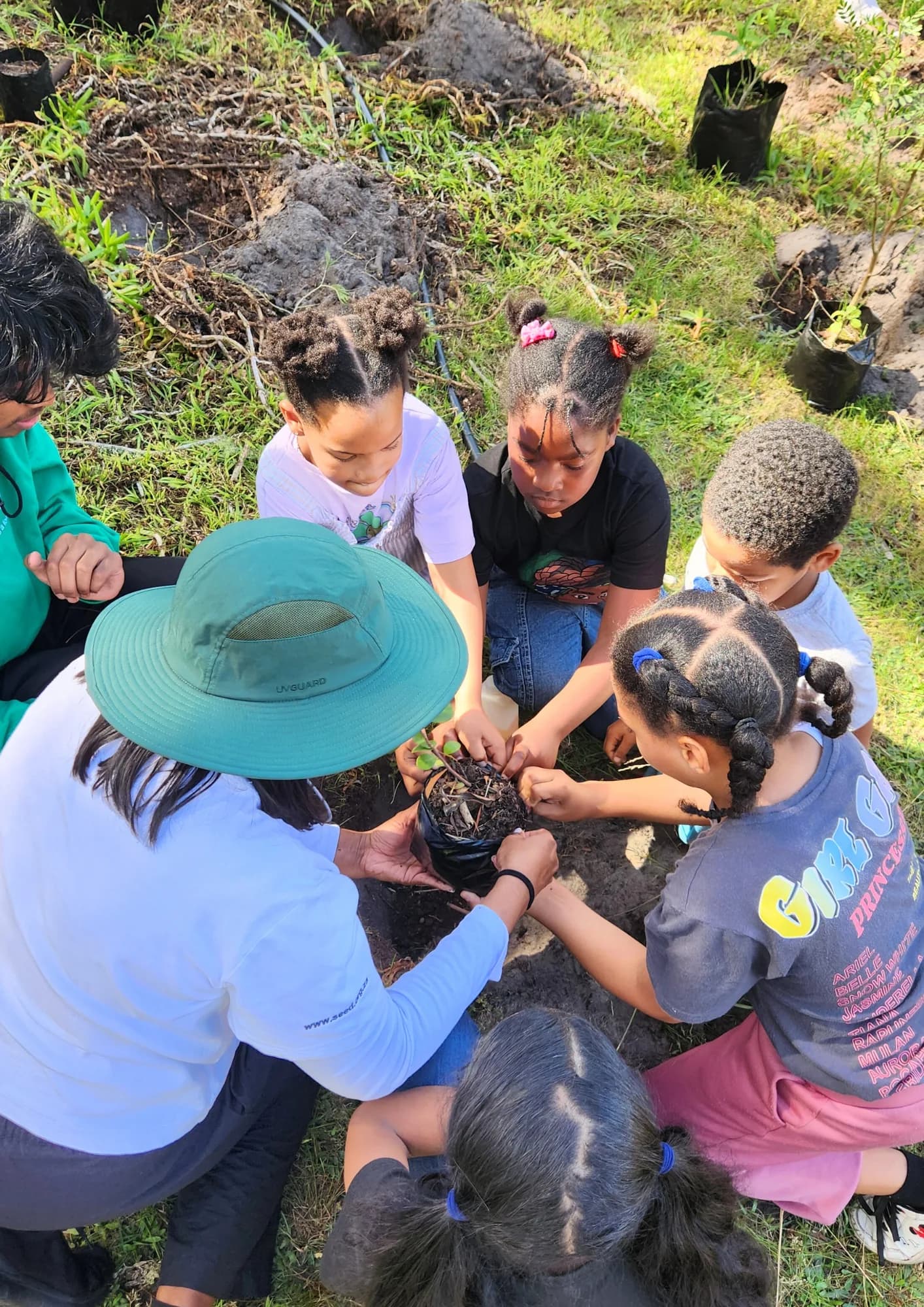
Today, the Ecolution Project supports at least eight satellite mini-nurseries, including Sizamile Nursery in Smutsville, Sedgefield. That network continues to grow, along with our vision to restore neighbouring farmland, educate young people, and inspire a new generation of land custodians. We also strive to create meaningful employment and, where funding allows, deliver skills-transfer programmes for disadvantaged children in partnership with the Rondevlei Learning Centre and the Kula Malaika Foundation.
By planting indigenous trees and weaving stronger communities, we are making a tangible contribution to restoring nature, strengthening resilience in the face of climate change, and leaving a living legacy for generations to come. In doing so, we hope to embody the timeless wisdom behind Gandhi’s words: Be the change you wish to see in the world.
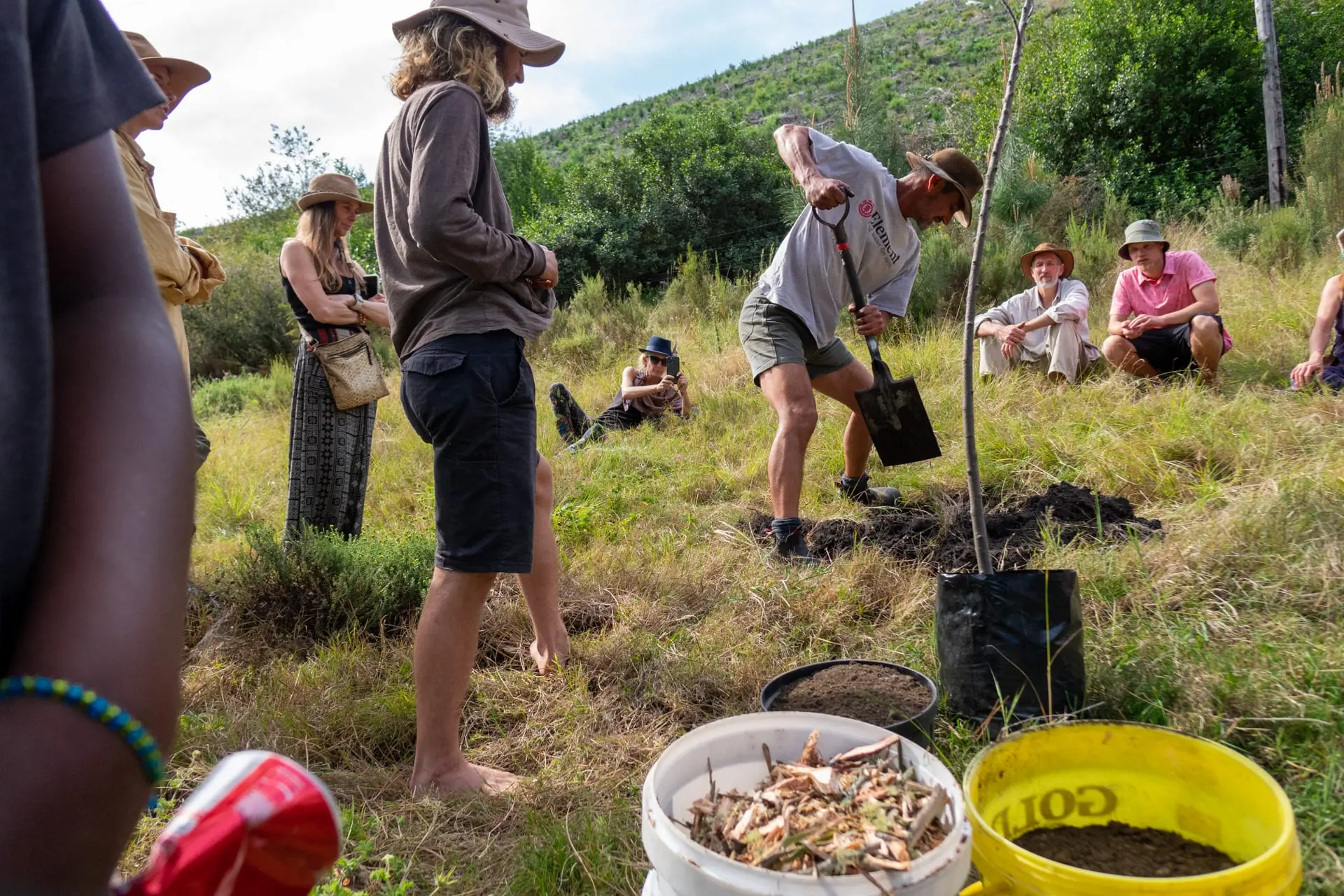
Ten years of planting, one hillside at a time.
Corridor map
Explore what we're restoring, layer by layer
Every planting weekend rebuilds the wildlife corridor from the ground up — literally. Tap a layer to see what's growing there.
Canopy
The tallest indigenous trees, closing the corridor overhead.
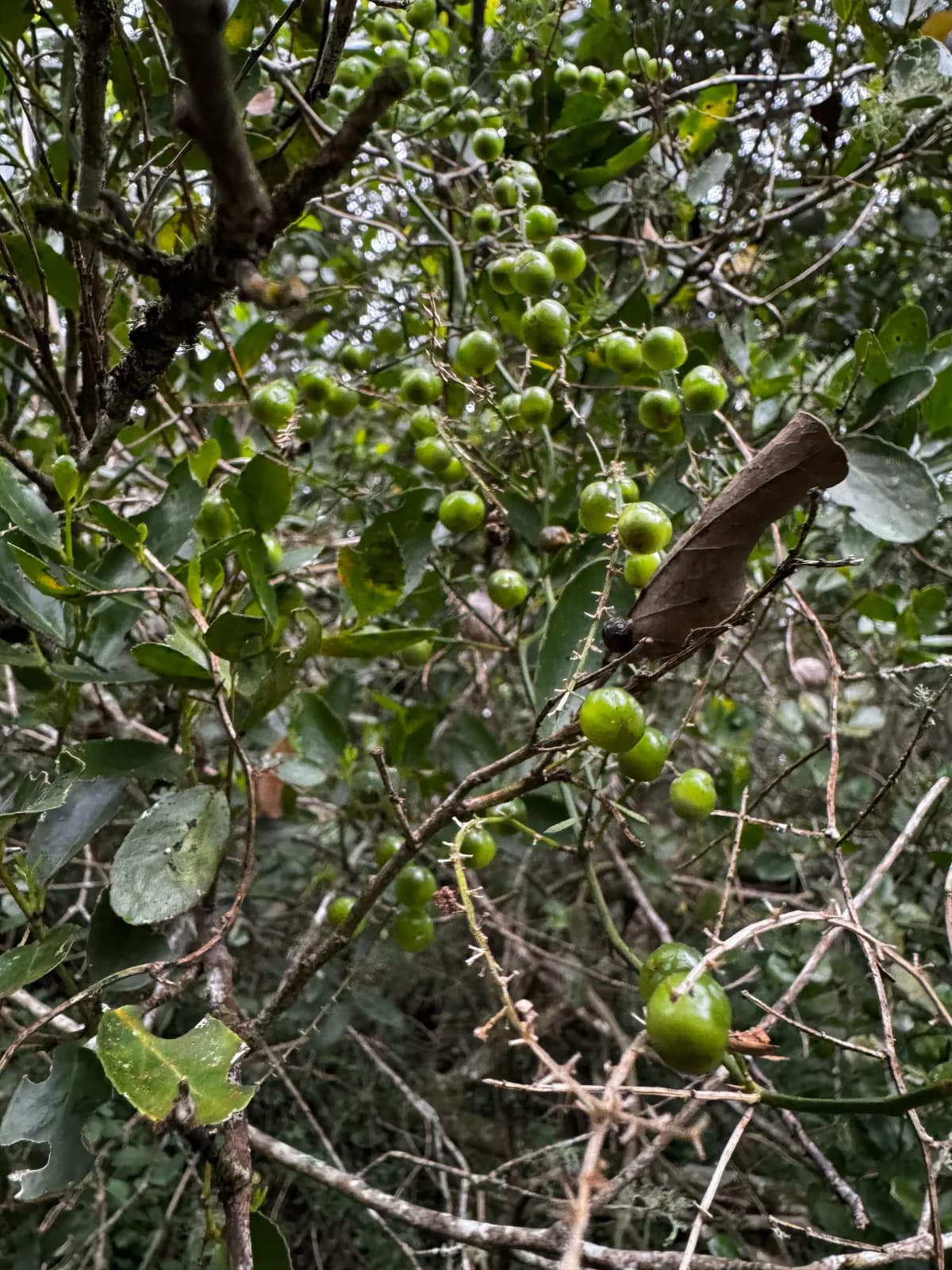
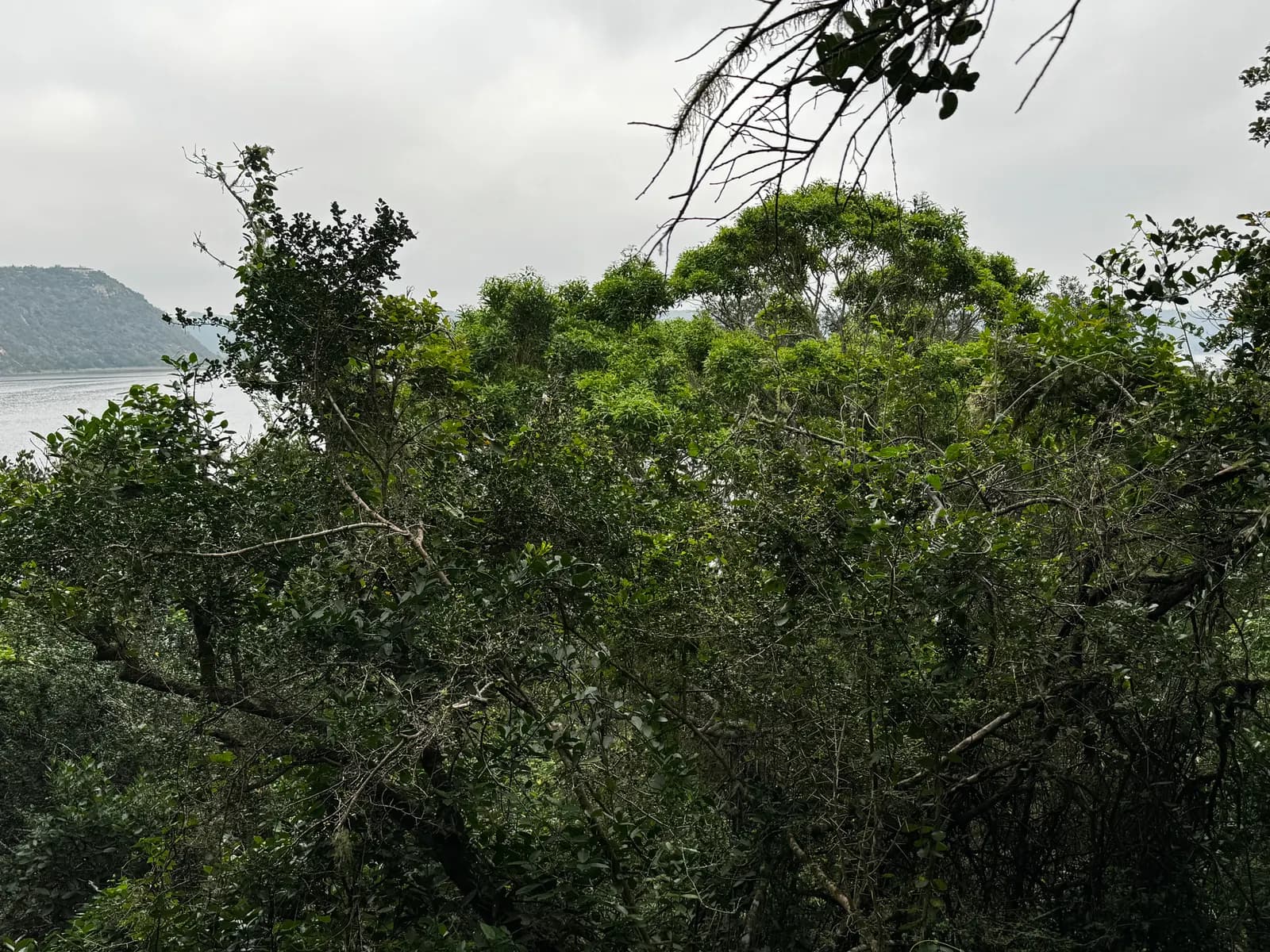
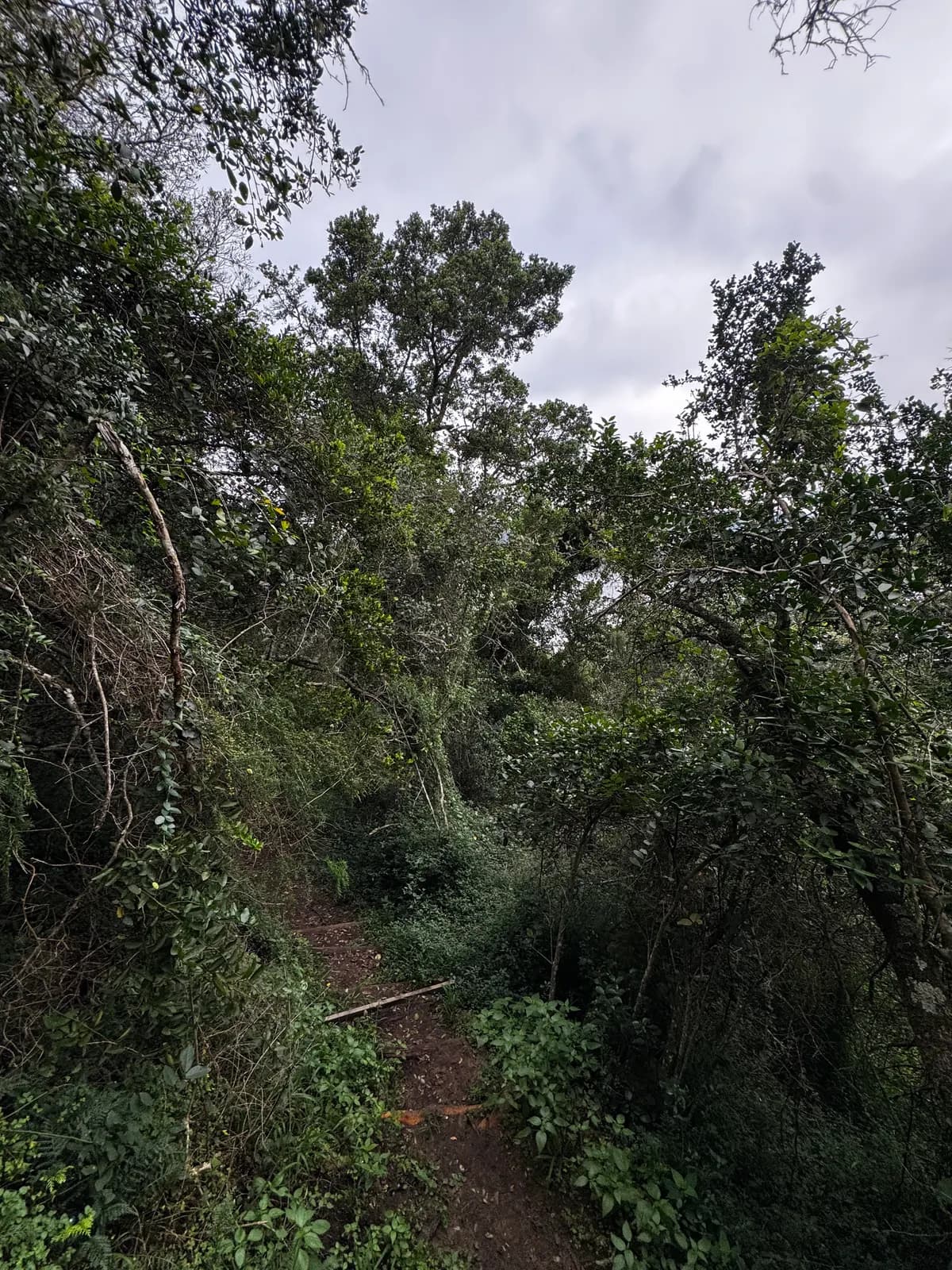
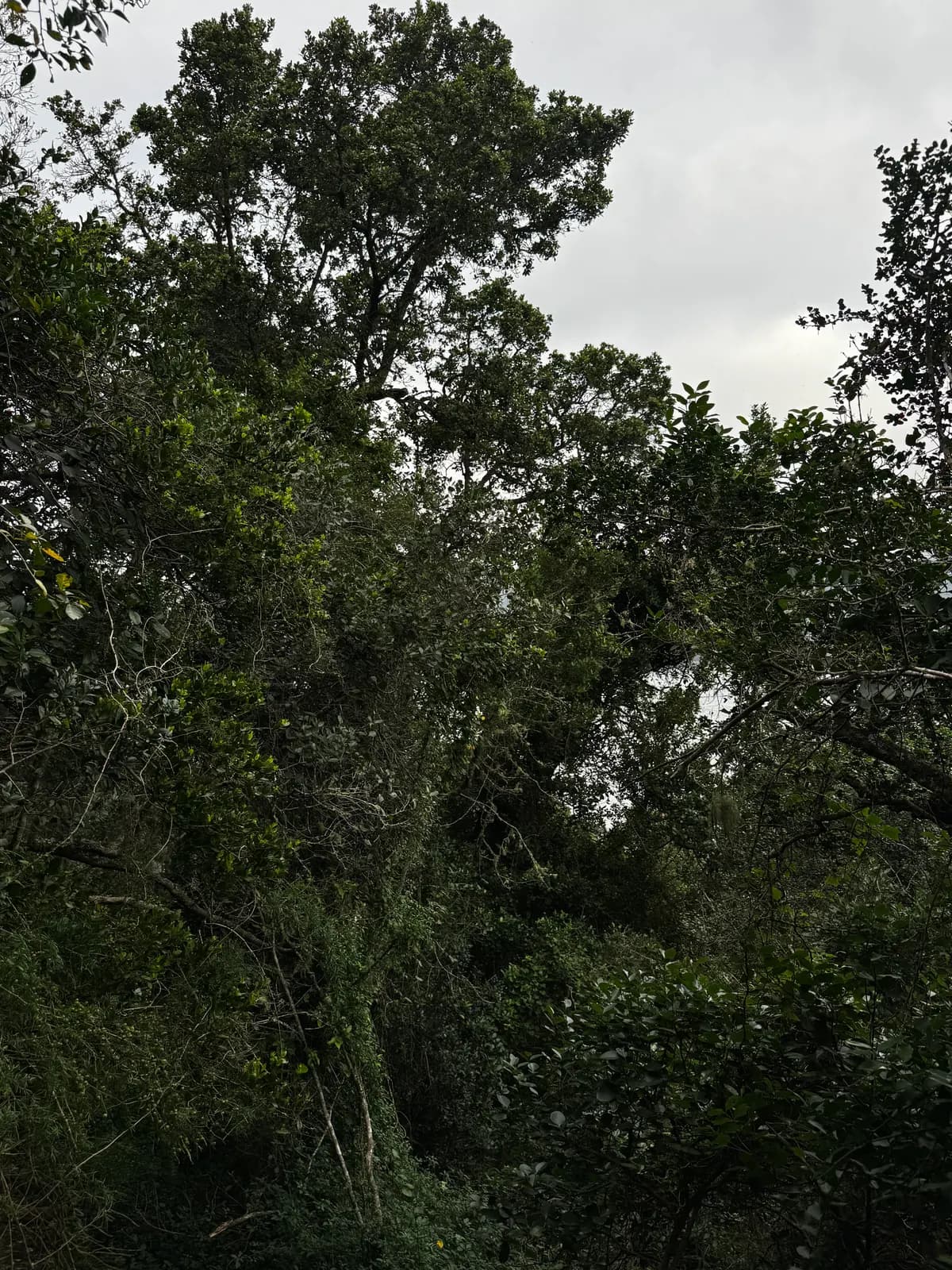
The canopy is the corridor's roof. Outeniqua Yellowwood, Black Ironwood, Assegai, Cape Chestnut and White Stinkwood are all growing up into it — the same Southern Afrotemperate forest that survives in the old Knysna and Tsitsikamma patches down the coast.
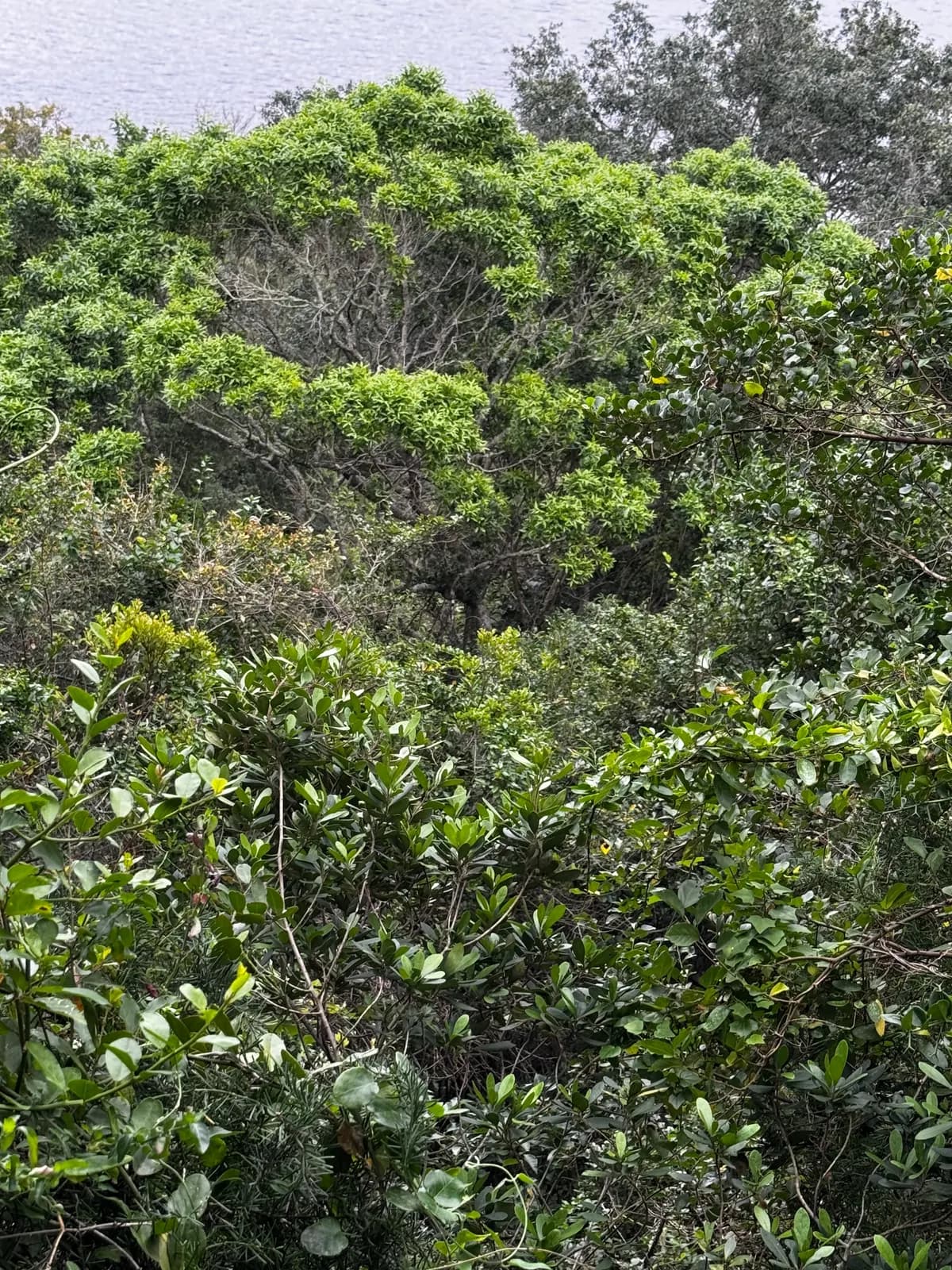
These trees don't grow alone in the wild, and they weren't planted alone here. Yellowwood, ironwood and assegai are natural companions, set together on the Summer Solstice planting circle so the crowns would knit into one continuous surface. Fast White Stinkwood closes the gaps while the slow trees climb. Closed like that, the canopy becomes an aerial stepping-stone: Knysna turacos, canopy birds and insects can move along the Ruigtevlei lakefront without ever coming down to open ground.
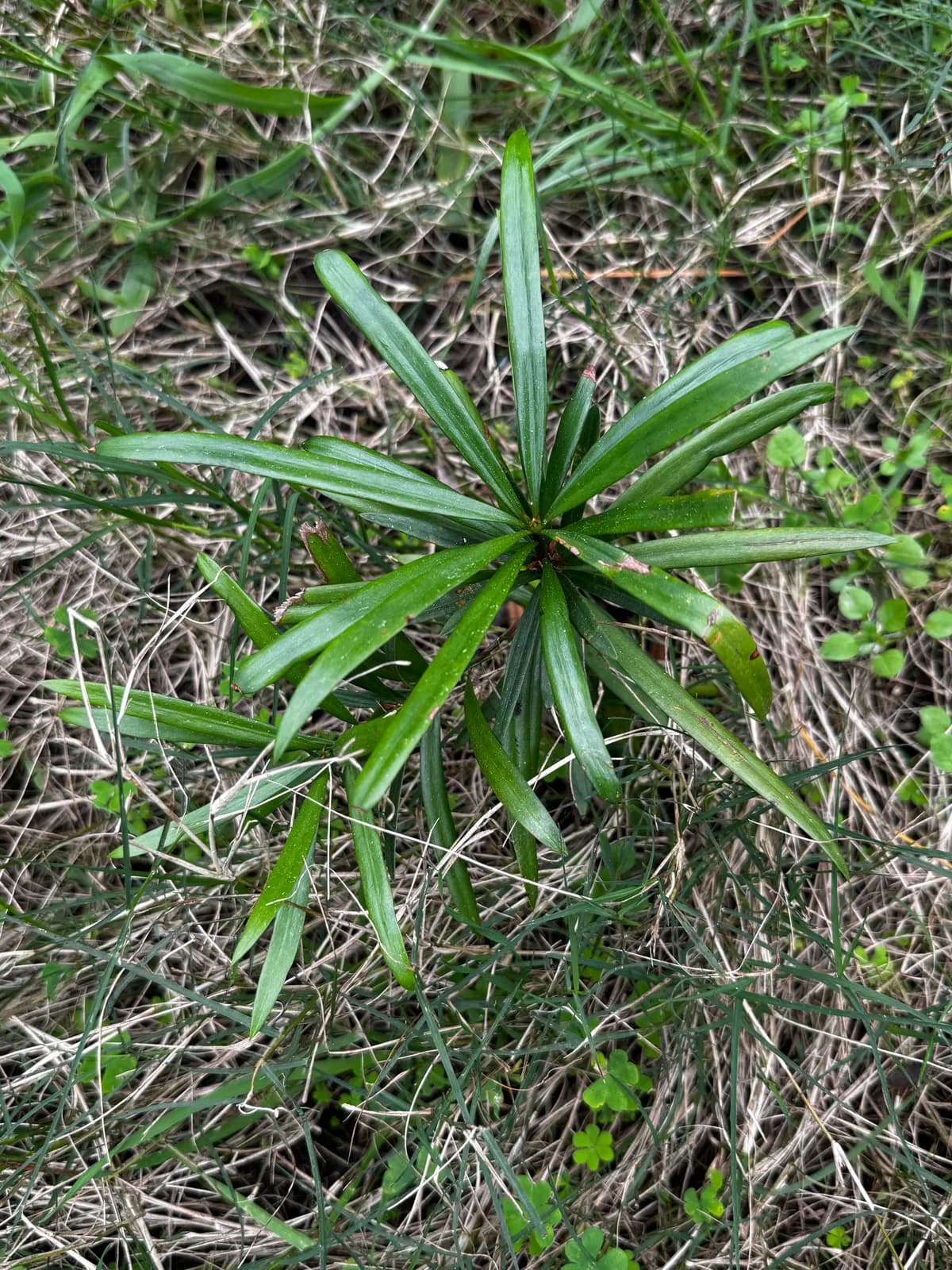
Outeniqua Yellowwood Podocarpus falcatus
South Africa's tallest forest tree and the emergent that defines the Garden Route skyline — old specimens in the Knysna forests clear 40 metres. It grows slowly and lives for centuries, so a yellowwood planted here is a bet on the next several generations rather than this one. Its fleshy yellow seed is a staple for Knysna turacos, Rameron pigeons and bushpig, which carry it out and reseed the forest for free.
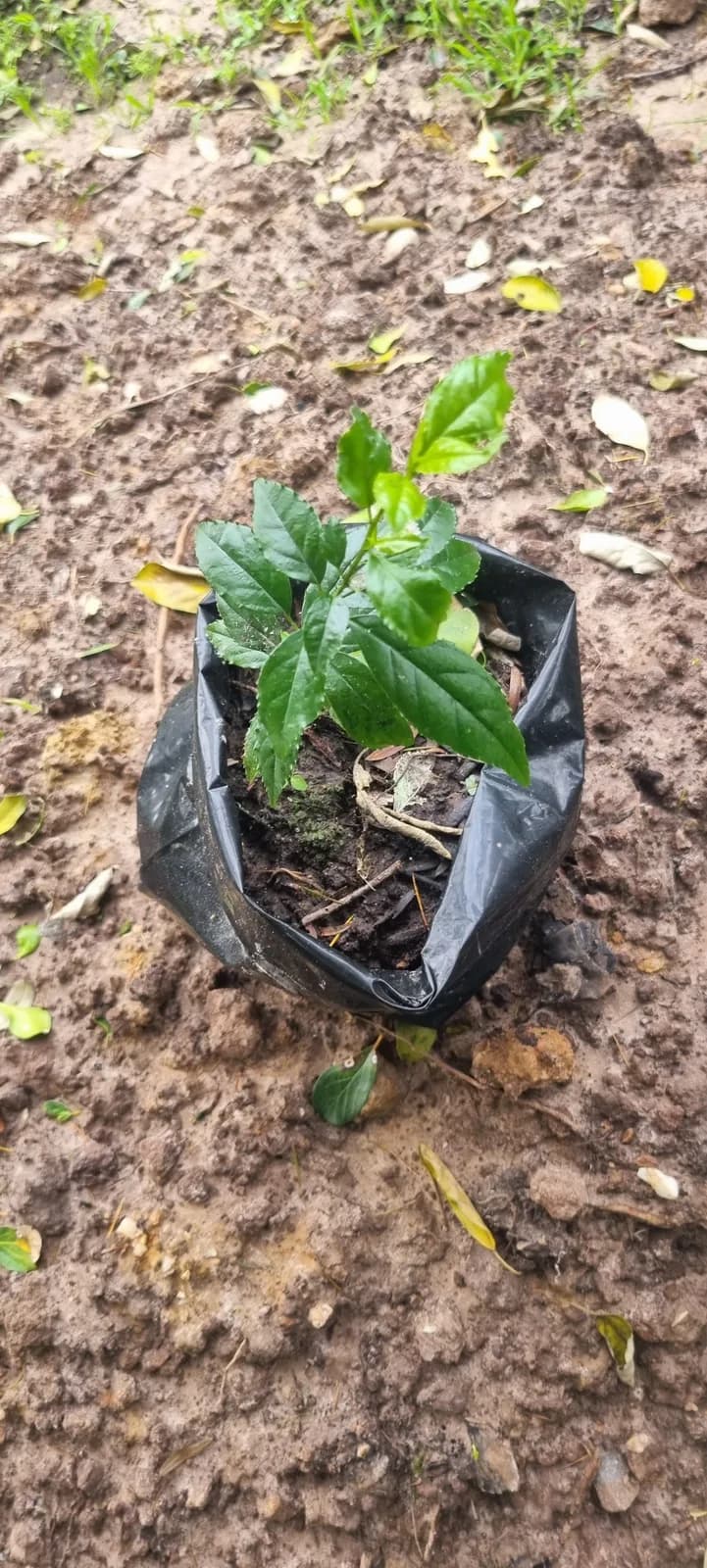
Black Ironwood Olea capensis subsp. macrocarpa
Locally ysterhout, and named for good reason — its timber is among the densest in the world and sinks in water. A wild olive relative, it holds a heavy evergreen crown that keeps the canopy closed straight through winter, and its purple-black drupes feed Knysna turacos, olive thrushes and pigeons. Slow, structural and effectively permanent, it is the tree that makes this stretch of forest hard to knock down again.
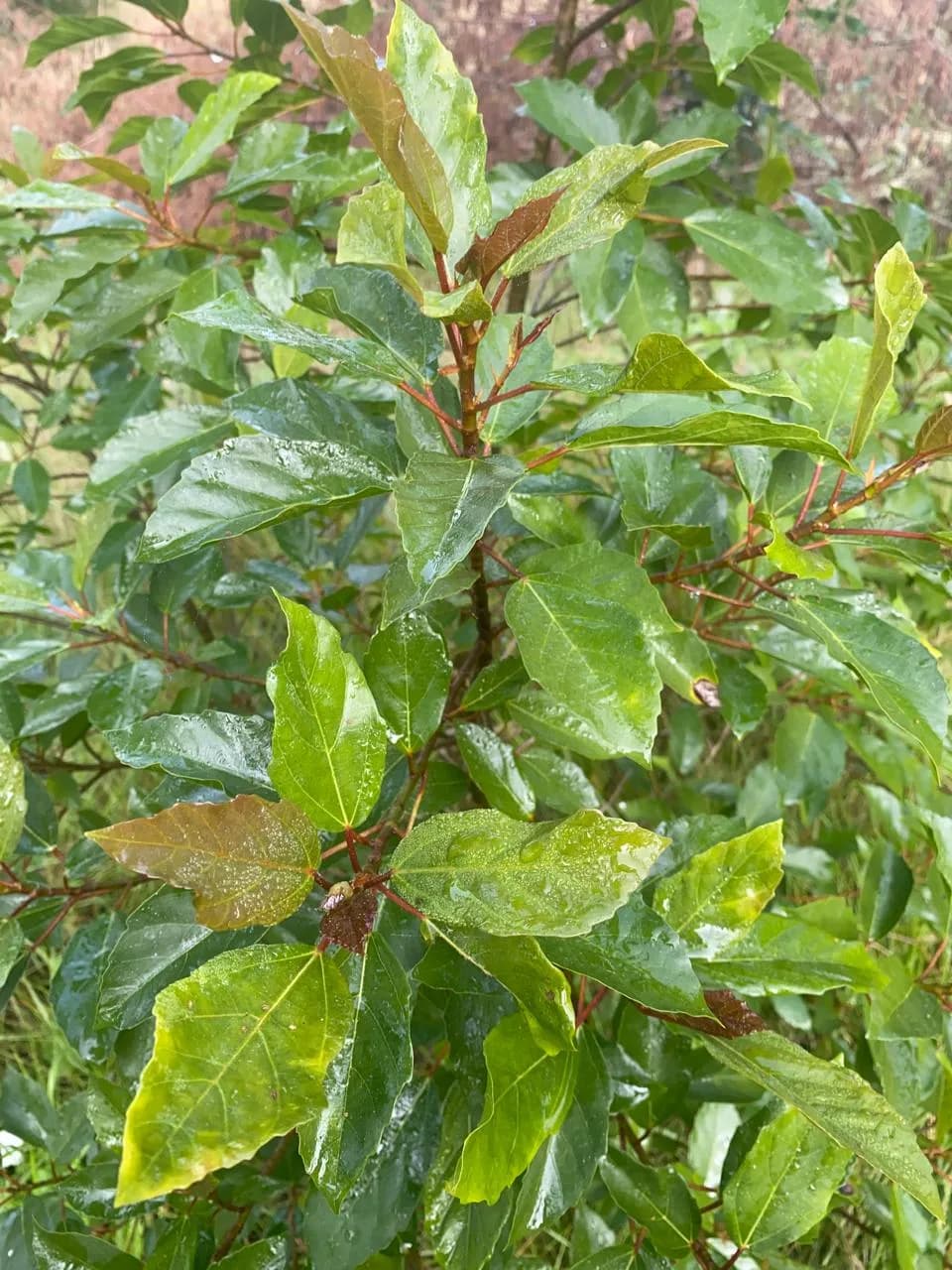
Assegai Curtisia dentata
An Afromontane canopy tree that grows naturally alongside yellowwood and ironwood — coarsely toothed glossy leaves flushed bronze at the tips, and small red-to-purple fruit taken by forest birds. Its hard, straight wood was traditionally used for spear shafts, which is where the name comes from. Wild assegai is heavily stripped for bark medicine across South Africa, so every one planted here takes a little pressure off the remaining wild stands.
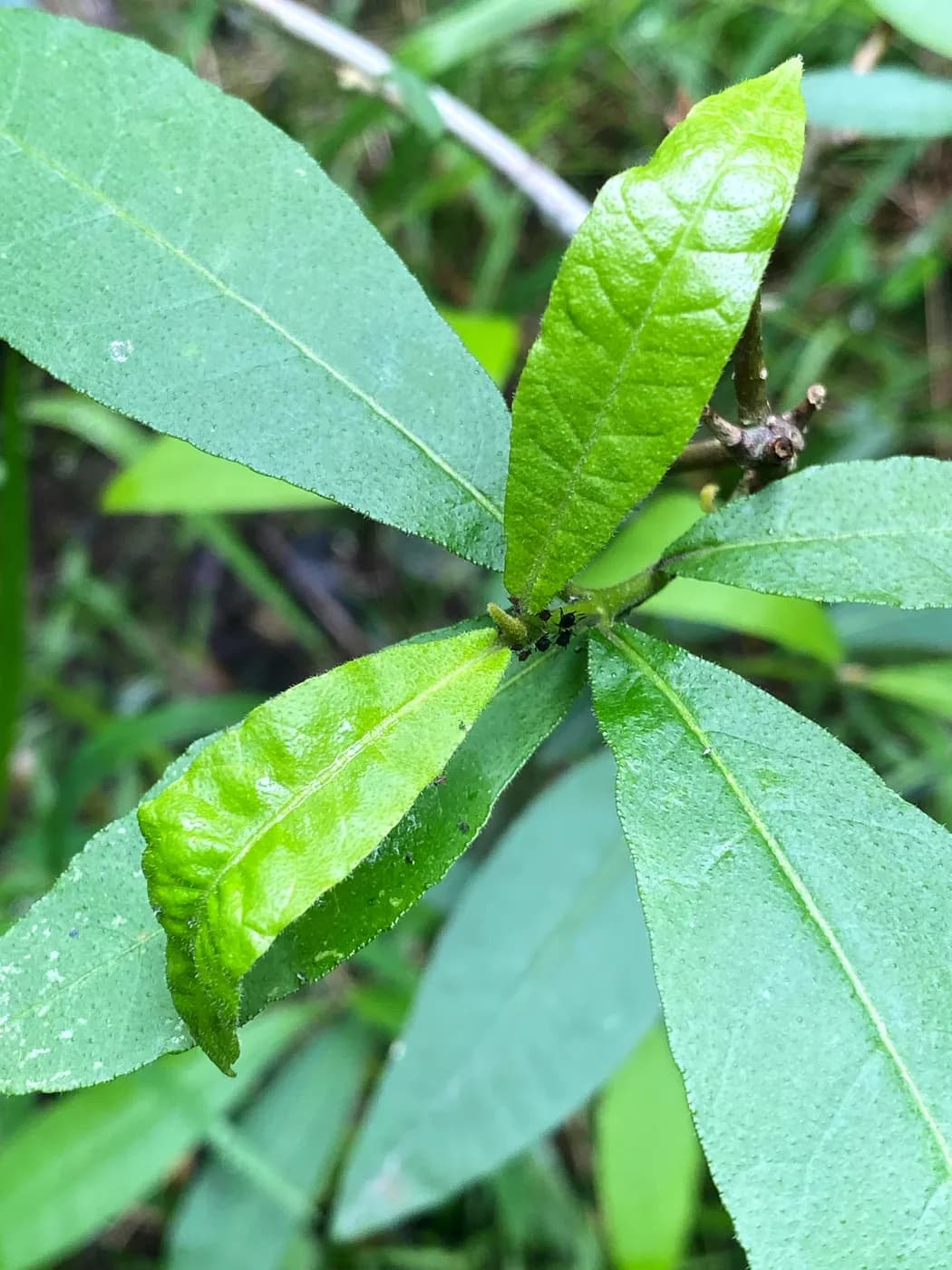
Cape Chestnut Calodendrum capense
A citrus-family canopy tree that disappears under a haze of pink flowers in early summer — one of the single biggest nectar events in the corridor, working carpenter bees, butterflies and sunbirds for weeks. Hold a leaf to the light and the oil glands show as translucent dots. The knobbly, star-shaped seed capsules split open in autumn and are unmistakable underfoot once you know them.
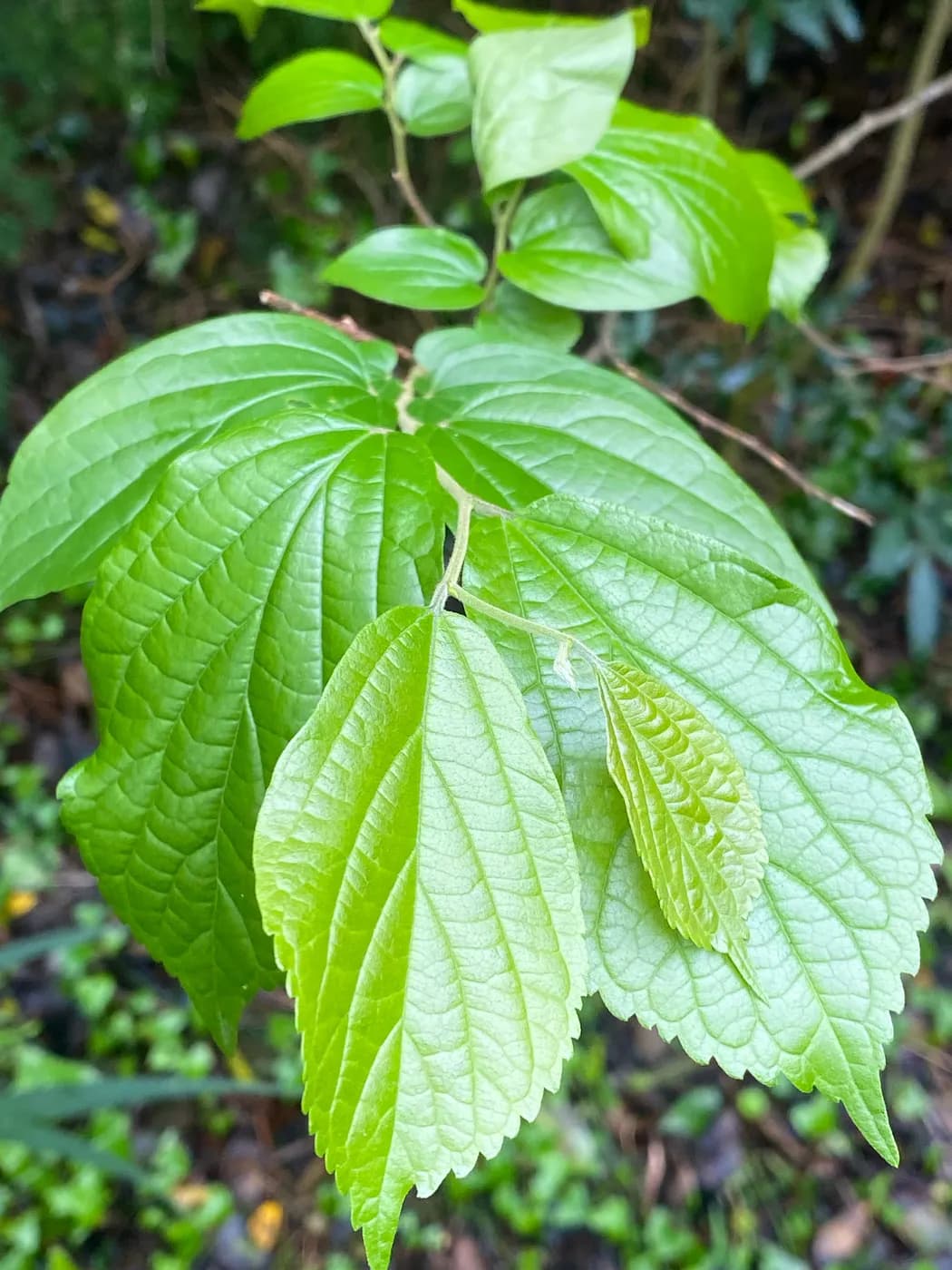
White Stinkwood Celtis africana
The fast one. Where most of this canopy measures its progress in decades, White Stinkwood throws height in a few seasons, which makes it the tree that closes a gap while the yellowwoods are still knee-high. Pale grey bark, soft drooping leaves three-veined from the base, and a heavy crop of small fruit that pulls in barbets and bulbuls. It is deciduous, so the leaf it drops each winter is a direct deposit into the forest floor below.
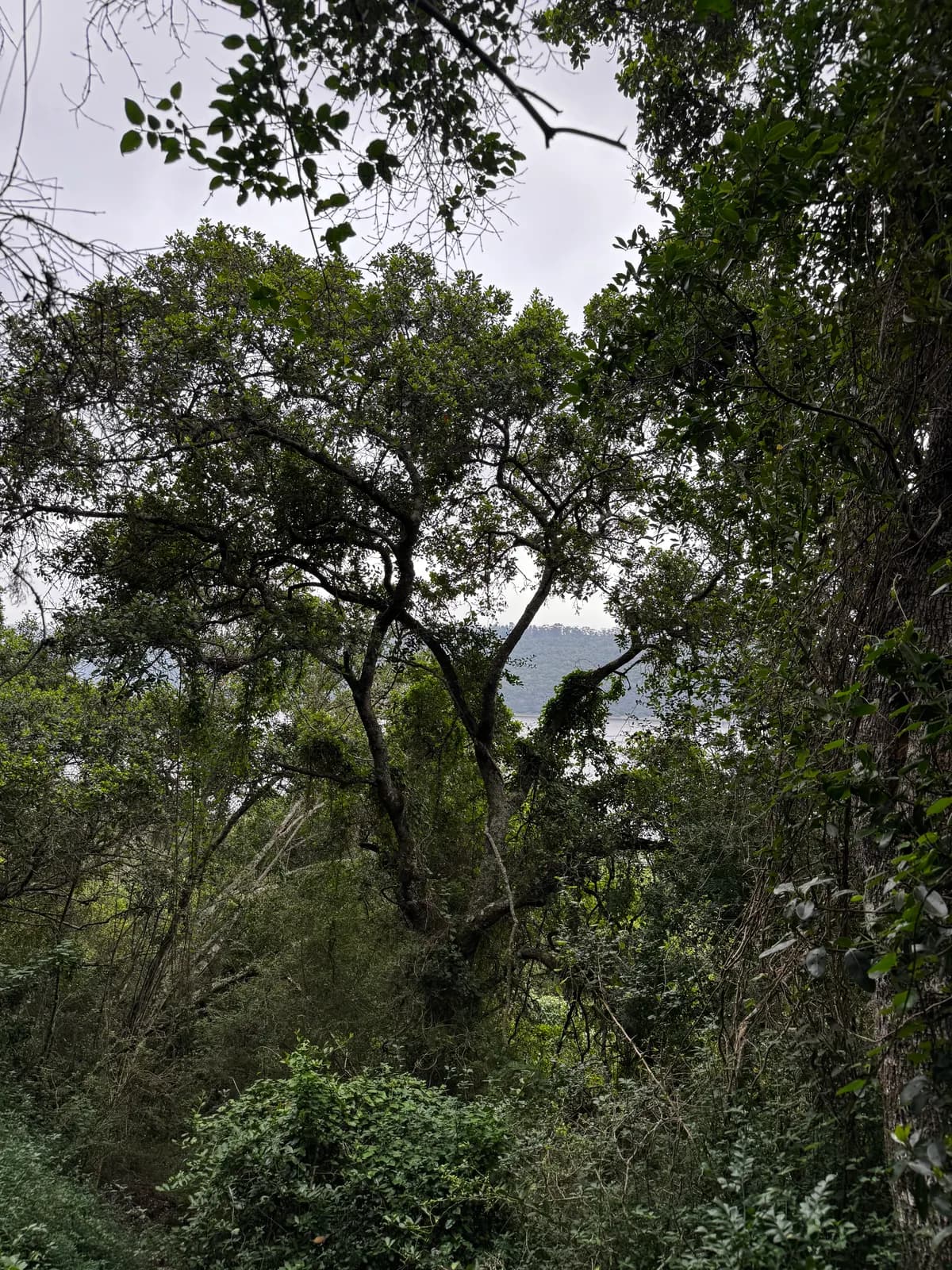
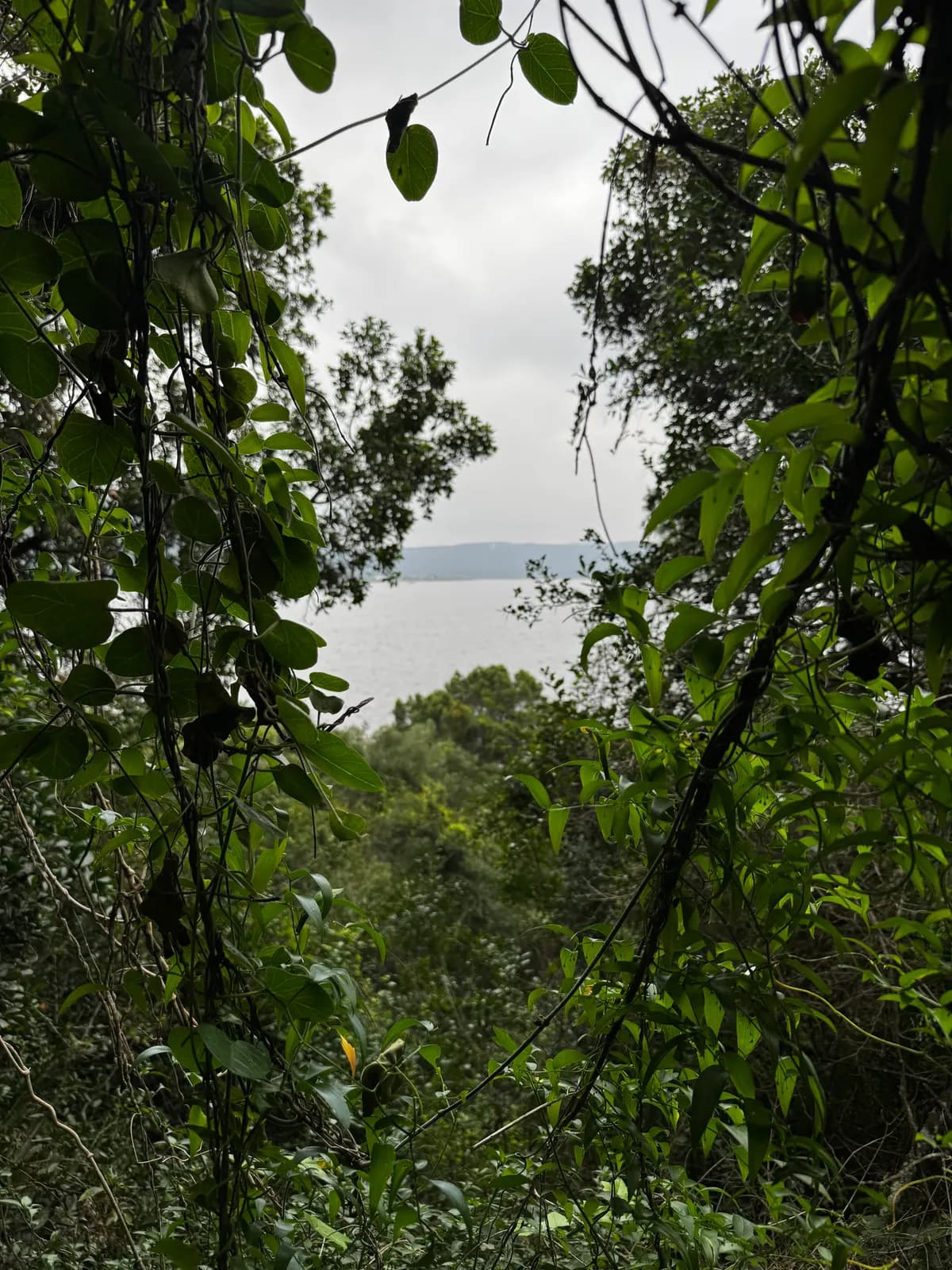
Ten years on, this is what the canopy looks like from its own level — one green surface running the Ruigtevlei shoreline.
Find the corridor
Where you'll find us
Well-Being Sanctuary, Hoogekraal Farm, Sedgefield, Garden Route.